
ASSURED TIMING FOR 5G, GOVERNMENT, AND MISSION-CRITICAL NETWORKS
Deliver precise, resilient timing across existing packet networks
Precise timing is now a strategic network requirement.
As operators expand 5G standalone, private 5G, edge, and mission-critical services, synchronization must remain accurate, resilient, and operationally assured across increasingly complex transport environments.
Conventional timing approaches do not scale well.
Net Insight offers a different model: transport-independent synchronization that extends assured timing across existing packet networks, improves GNSS resilience, reduces infrastructure dependency, lowers total cost of ownership, and provides centralized observability, control, and service assurance.
Solutions built for real-world timing challenges
5G and Mobile Networks
Deliver carrier-grade synchronization for 5G and mobile networks without PTP-aware transport and GNSS at every site. Built for operators that need accurate, resilient timing at scale.
Critical Infrastructure
Provide trusted, resilient timing for critical infrastructure where continuity, traceability, and secure operation are essential. Designed for utilities, finance, government, defense, and other mission-critical environments.
Time-as-a-Service (TaaS)
Enable operators and service providers to deliver timing as a managed, SLA-backed service using existing infrastructure. Unlocks monetization through resilient synchronization across regional enterprise networks.
Powered by Zyntai Time Intelligence
Add centralized orchestration, timing analytics, visibility, and assurance across distributed synchronization networks. Maintain trusted synchronization with greater control and insight.
Time as a Fundamental Capability in 5G
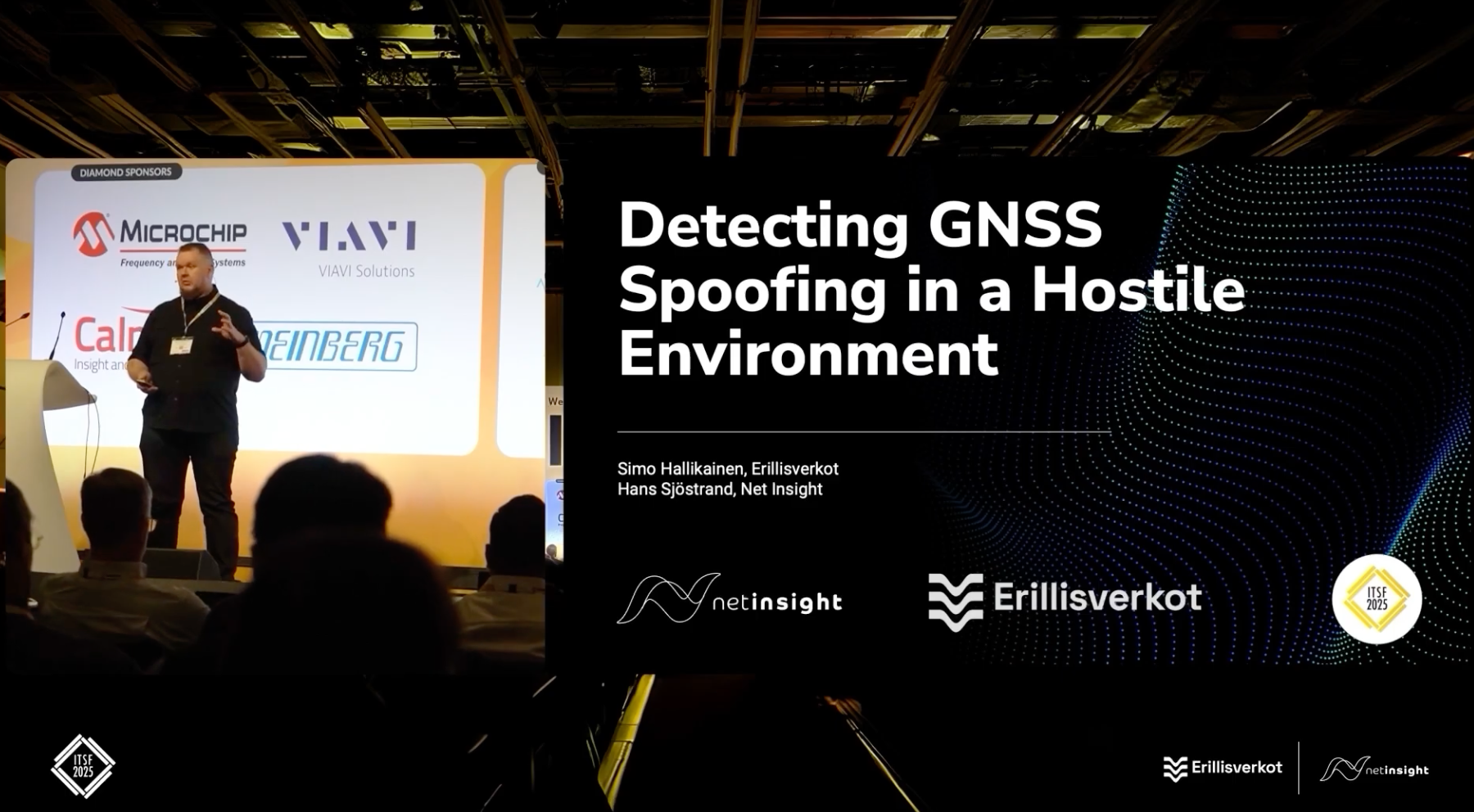
This video explores how 5G, increasing GNSS vulnerability, and more complex transport networks are reshaping synchronization requirements, and why operators need a new model for resilient, assured timing.
Our Solution
Assured Timing Across
Real-World Networks
Enables operators to deliver resilient timing across existing networks while reducing infrastructure cost and complexity. It helps protect service continuity, reduce GNSS dependency, and create a stronger foundation for premium 5G and critical services.

Precise Timing
Achieve highly accurate synchronization for reliable 5G performance and mission-critical services.

Transport-Independent Synchronization
Works across existing network infrastructure, helping operators avoid costly network-wide upgrades, accelerate deployment, and lower total cost of ownership.

GNSS Resilience
Reduces dependence on GNSS and helps maintain trusted timing during disruptions, improving resilience and minimizing the risk of service-impacting failures.








FAQ
What is time synchronization?
Time synchronization is the process of making sure that clocks in different systems, devices, or networks all show the same, precise time. In telecom and IT, this is critical for ensuring data is transmitted in the right order, networks run reliably, and services for mobile networks, financial transactions, or industrial operations function without errors. Time can be synchronized using sources like GNSS (GPS) or distributed through network-based synchronization.
What is GNSS used for in networks?
GNSS (Global Navigation Satellite Systems, such as GPS, Galileo or GLONASS) is widely used in telecom and IT networks to provide a precise and trusted time source. Accurate timing is essential for synchronizing critical networks like mobile networks, power grids, and supporting critical services such as financial transactions and broadcasting. GNSS for time is accurate and widely used. However, GNSS signals are weak and vulnerable to interference like jamming, spoofing or meaconing. Because of this, networks can complement GNSS with alternative or backup timing solutions to ensure resilience and security.
How does GPS time synchronization work?
GPS time synchronization works by using signals from GPS satellites, providing accurate time. A GPS receiver on the ground picks up these signals to use as time reference. The accurate time can then be distributed to network nodes like servers, or telecom equipment to ensure they are synchronized. In mobile networks like 5G, synchronization is critical for coordinating base stations, avoiding interference, and delivering seamless services. Because GPS signals are weak and can be disrupted by jamming, spoofing, or indoor coverage limitations, many networks also combine GPS with network-based synchronization methods for more resilience.
How can networks achieve precise timing without GNSS?
Networks can achieve precise timing without GNSS by distributing time over the network itself. This is done by network-based synchronization which delivers accurate time from one, or multiple, time sources to all nodes in the network. This approach is increasingly important in environments where GNSS is unavailable or unreliable. By using network-based synchronization, operators can ensure accurate timing without depending solely on satellites or not depending at all if other time sources like atomic clocks are used.