BLOG

Open Insight #22


We continue to strengthen our media portfolio and enhance the value we deliver to our customers. At the same time, we launched a cost-saving program this spring to improve operational efficiency and strengthen profitability. We look to the future with confidence, driven by strong activity in the media segment. Going forward we expect time synchronization to increasingly contribute to our growth.

There is strong interest in Zyntai, and standardization work is currently underway. During the quarter, we secured our first time synchronization deal in media for a major global sporting event and also received a smaller field order from a new 5G operator in North America.

The vulnerability of GPS/GNSS is becoming an increasing concern, putting us in a strong market position.  An increasing number of regions and countries are highlighting the problem with GPS, and to date, more than 15 customer contracts have been signed. Our role in major international initiatives and collaborations –from 6G and Open RAN to new solutions for critical timing and synchronization systems  – confirms that we are a key player in building the critical networks of the future.


Strong momentum for Net Insight – focus on AI, cloud, and secure IP distribution

In the Media segment, we’ve had a busy and eventful spring, marked by several key launches and collaborations that further strengthen our position as a leading industry innovator.

Ahead of the NAB Show in Las Vegas (April 6–9), we announced, among other things, a strategic partnership with NETINT Technologies.  As part of this collaboration, their AI-powered video processor chip, Smart VPU™, is being integrated into our cloud-based platform, Nimbra Edge. We are now expanding beyond our traditional core in reliable media transport by adding advanced video processing and transcoding capabilities directly into the platform. This gives our customers access to a more complete solution for intelligent and efficient cloud-based media workflow management.

We have also deepened our partnership with Globecast, jointly supporting, among other things, the Premier Padel sports event in its transition from satellite to modern, cloud-based IP distribution. This is an excellent example of how we enable greater efficiency and cost savings—without compromising quality or security.

Security remains a key priority. This spring, we launched Facility Protect, a new security solution built on international standards. The solution is an important step in meeting the growing demands for content protection in production environments.

In parallel, we also launched Facility Connect – a powerful and scalable solution for connecting broadcast facilities. It enables robust, efficient, and secure connectivity between facilities, which is crucial for large-scale remote productions. Interest in this type of solution has been especially strong within the growing segment of unmanaged networks.

These initiatives reinforce our position in next-generation media technology – where cloud and secure IP distribution take center stage – and lay the foundation for continued growth and innovation. Demonstrating the strength of our offering, we recently secured a major live media transport agreement worth USD 6 million with an existing customer. The deal covers the delivery of our most advanced media solutions to US sports venues and highlights the growing demand for high-capacity media networking and remote production – areas where we excel.  This is one of the largest media contracts in Net Insight’s history.

The development of our 400 Gbps platform, designed to meet the growing demand for video in our customers’ networks, is progressing well. The new hardware modules have been built and are currently undergoing lab testing, with a focus on the high-speed interfaces powering the platform’s 2.4 Tbps switching capacity. Software applications will be finalized and verified over the coming months, and the first batch of hardware assembled. If everything proceeds according to plan, we expect to deliver our first units supporting 400 Gbps link speeds around year-end.

Focus on robust timing and synchronization in the US

Robust time synchronization is becoming a global priority. In Sweden, the Post and Telecom Authority (PTS) has already introduced requirements for GNSS-independent time synchronization in 5G networks. In the EU, the European Commission is evaluating the challenges of cross-border time distribution and preparing recommendations to ensure robust timing. In India, the Department of Consumer Affairs has launched a national initiative to securely and robustly distribute Indian Standard Time.

In the U.S. Federal Communications Commission (FCC) recently published a Notice of Inquiry (NoI) seeking input on strengthen the country’s Positioning, Navigation, and Timing (PNT) systems. The FCC emphasized that exclusive reliance on GPS creates a single point of failure and represents a risk to national resilience.

Net Insight submitted a formal response, advocating for a robust national time distribution based on mesh architecture for time distribution and diverse time sources to secure the future of PNT infrastructure. The response is public and available here: Net Insight submission.

These initiatives highlight the growing awareness of robust synchronization as essential to critical infrastructure, and particularly for 5G. Our ongoing dialogues with regulators and other stakeholders allow us to share insights on secure, network-based synchronization versus traditional satellite and radio-based methods. Over time, this will increase pressure on operators to invest in secure solutions, ultimately supporting our long-term sales growth.

Focus on robust timing in the US – on and off the event floor

May was an active month for our North American synchronization team, including key industry events. We participated in the WSTS conference in Savannah, Georgia – a central gathering for synchronization experts across industry and government. Net Insight delivered two presentations: one on time synchronization in critical networks, and another on synchronization in broadcast environments.

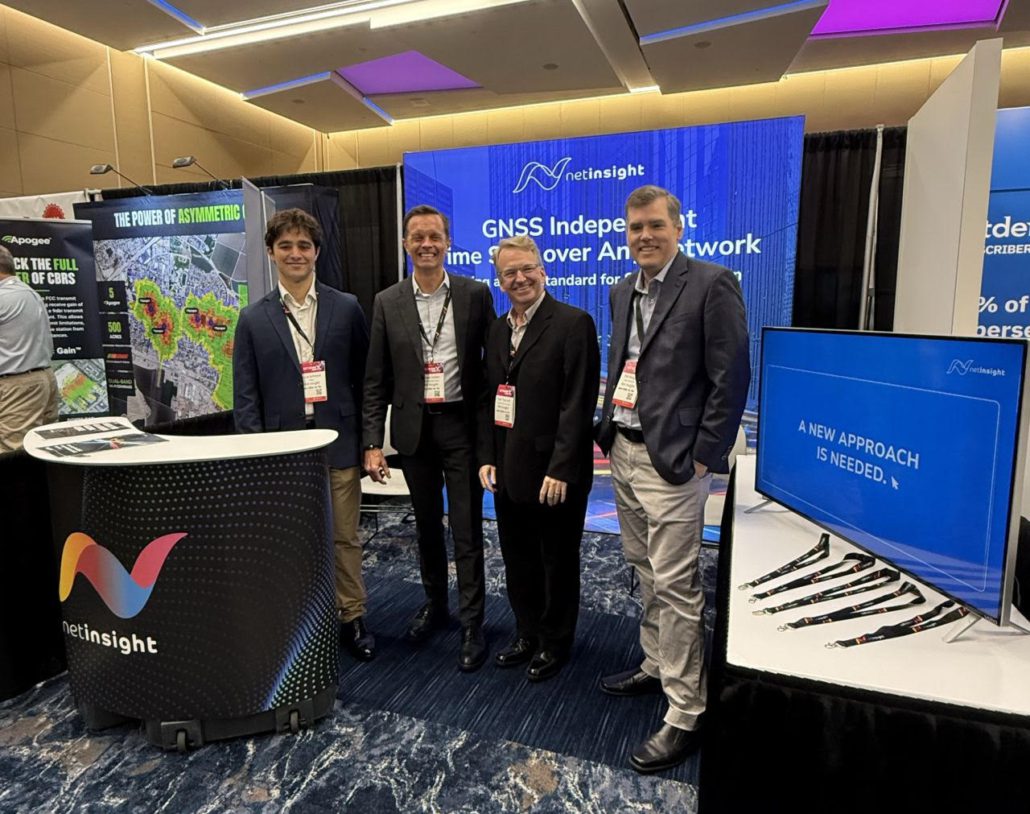
We also attended Network X Americas in Irving, Texas, organized by Informa. Our team participated with a booth and held numerous discussions on the evolution of mobile networks– particularly the role of synchronization as operators shift to 5G Standalone and mission-critical services.

These events demonstrated the growing interest in robust timing across North America.

Net Insight to present at ITSF – the world’s largest conference on timing and synchronization

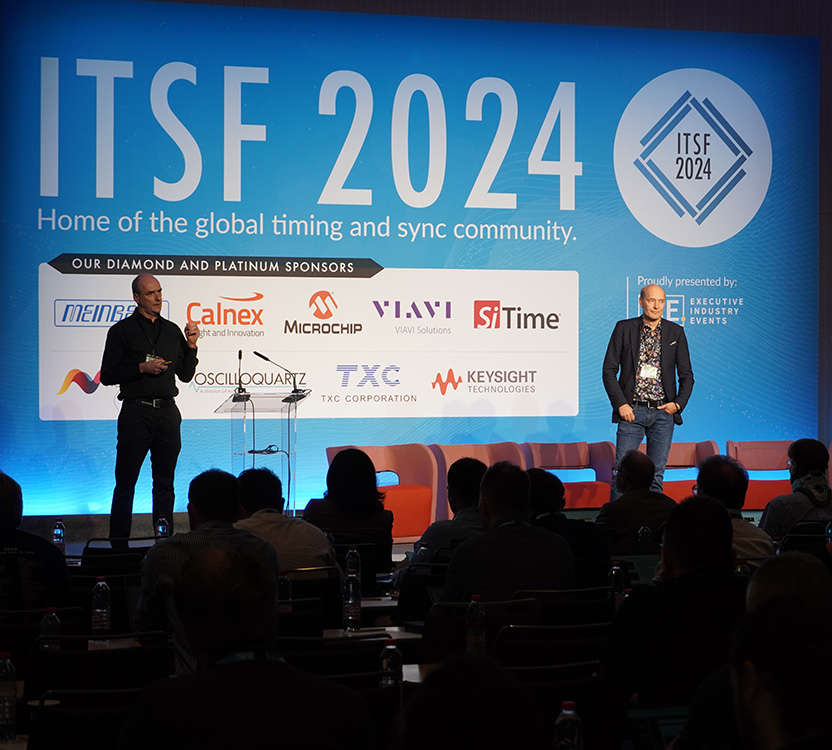
We are proud to once again participate in the International Timing and Sync Forum (ITSF) in Prague this October.  The event gathers the latest developments in timing and synchronization across telecom, energy, data centers and defense.

This year, a record number of presentations were submitted. Among the highlights is a NASA presentation on timing in lunar research. We are honoured to have three of our own presentations accepted for the main stage:

  • In collaboration with the UK’s National Physical Laboratory (NPL), we’ll present our joint work on robust time synchronization over unreliable networks.
  • Together with our partner Erillisverkot, we’ll demonstrate how to detect GNSS spoofing in a hostile environment – atopic of strong interest among customers.
  • Our third session will showcase Net Insight’s innovations within the Zyntai portfolio tailored for data centers and Open RAN.

I look forward to sharing more from ITSF after the summer.

Testing robustness in the harshest environments of Norway

The annual Jammer test, held in September in Andøya, Norway, is the world’s largest open test for PNT and GNSS robustness.

Organized with partners such as the Norwegian Space Agency and Norwegian Defence Research Establishment, the test challenges infrastructure under extreme jamming and spoofing conditions.Net Insight has previously contributed Zyntai equipment, but this year marks our first participation as an official participant. We will use our Zyntai solution in active testing to gather valuable insights in some of the world’s harshest environments. As the organizers say: “Lab tests can only take you so far.”

Our participation will enhance both product development and broader understanding of robust synchronization.

Press release from Türk Telekom

A few weeks ago, we issued a press release following Türk Telekom’s announcement highlighting their focus on 6G and support for of Open RAN standardization, in collaboration with Parallel Wireless and Net Insight. A key part of this initiative is developing GNSS-independent synchronization and integrating it into the Open RAN architecture.

As networks evolve toward 6G, cost-effective, GNSS/GPS-independent solutions are needed. We are pleased to contribute our synchronization expertise to this initiative.

The time synchronization market is entering an exciting phase, shaped by a combination of structural drivers and short-term challenges. Our strong organization, proven delivery capacity, and unique Zyntai solution (commercially available since Q2 2024) position us well. Our order book now exceeds SEK 140 million.

The standardization work is progressing, paving the way for broader market adoption. Growing concerns about GNSS vulnerabilities support our positioning. Reference customers such as Tre Sverige and Teracom have implemented hundreds of Zyntai nodes, and over 15 additional customer wins demonstrate strong momentum. We are now also seeing interest from major operators who previously opted for hardware-based time synchronization solutions but are now reconsidering, due to high OPEX and the challenges of transitioning to optical 100/400G transport networks.

At the same time, challenges persist. The 5G rollout has slowed in the US and Europe, resulting in long sales cycles (12–24 months). Geopolitical factors such as trade tariffs further delayed decision-making. However, more customer references and continued standardization can mitigate these effects. In Turkey, for example, the 5G rollout has been delayed by two years, but licenses are expected post-summer, with larger deployments starting at the end of the year and increasing in volume throughout 2026.

Awareness of GPS/GNSS vulnerabilities has increased significantly, and most 5G operators today recognize the need for network-based synchronization to secure their networks and critical applications. Economic uncertainty has led some operators to postpone investments, but we have adapted our sales messaging to highlight TCO reduction and new revenue opportunities. In conclusion, while 5G market has seen slow-down and longer decision cycles remain, the synchronization market continues to grow with a strong business case. Today, over 15 commercial customers are in early deployments or testing, and our order book stands at SEK 140 million. Two new major 5G operators began testing the solution this quarter, and a North American 5G operator purchased products for field trials. Last quarter, we launched our media profile for synchronization, and this quarter, we secured our first synchronization agreement with a major media customer for a large global sporting event.

There is clear market momentum. Our technological leadership, strong customer base, and global production capacity give us a distinct advantage – forming the basis for long-term, structural growth.


Final words

Net Insight’s solutions are gaining increasing recognition, both in IP media and in the fast-growing market for cost-effective, robust time synchronization. With a solid product portfolio, strategic partnerships, and continued focus on innovation and efficiency, we are well positioned for the next step in our growth journey.

I look forward to an exciting second half of the year and would like to take this opportunity to wish you all a truly pleasant summer – with time for rest, renewal, and fresh perspectives.

About the Author