BLOG

Europe sets out to secure resilient time distribution


In this post we’re sitting down with Lukasz Bonenberg, Space Programmes Policy and Scientific Officer at the Joint Research Centre JRC of the EU Commission, and Magnus Danielson, Senior Technologist at Net Insight and sync evangelist, for a talk about a project initiated by the JRC to look at a very critical component of our society that is more complex than we might think: time.


The JRC gives advice on science to the European Commission so that the EU can make policy decisions. They now have the task to review the changing landscape of PNT – Positioning, Navigation and Timing, to address challenges that face Europe today in terms of resilience and future technology, and what recommendations can be put forward to address the future EU expertise and leadership.

Lukasz explains: “Positioning and Navigation I think is rather intuitive these days to the general public on why it’s needed, but timing is actually the foundation, underpinning everything. Without accurate time, you’re not able to give an exact position and you can’t navigate properly, so accurate time is crucial.” The key challenge is that a single global reference is needed. Time is maintained locally but needs to be tied to UTC – Coordinated Universal Time. And it is the distribution of UTC that has been identified by JRC as the biggest challenge for resilient EU PNT. While it’s fairly straight-forward to keep local time, maintaining it connected and aligned with global time is more complex.

Lukasz: “This can be compared to working with cartography back in the old days. If you had an island out in the ocean where all things were locally mapped out, it didn’t matter so much to people living there that the island itself was mapped with coordinates that were 200km off. When you start connecting mainland and the island with cables or flights though, the island’s coordinates relative to the mainland become extremely important. The island now needs a global reference, and not only local reference.”

So how is a global time reference retrieved today? The cheapest way is to use GNSS, Global Navigation Satellite System. Most are familiar with the American GPS (Global Positioning System), and Galileo is Europe’s equivalent. Our societies today are extremely dependent on GNSS, and in Europe, GNSS enables more than 10% of Europe’s entire GDP. If GNSS were to go down, the impact on society would be massive. That being said, the likelihood of GNSS going completely down is extremely low. The risks with relying only on GNSS come instead from other factors.

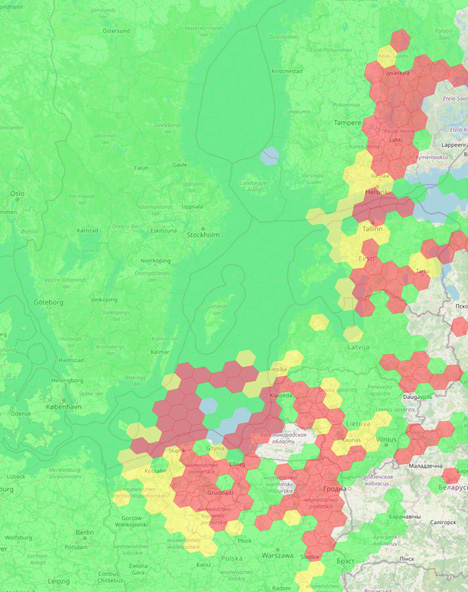
Magnus reflects: “Resilience issues with GNSS is nothing new, and back in the 90s, there used to be a lot of problems when using a GPS signal. Since then, the systems have become better and we don’t see those problems anymore. GNSS can be affected by space weather, but the impact is far less than it used to be. The threat nowadays is instead that the GNSS signal can get jammed or spoofed in an area or a bigger region. These risks have always been known, but now we are starting to see it happen for real.” The current global geopolitical tensions have highlighted the vulnerabilities of GNSS, and data from Flightradar24 found almost 40 Million people lived in areas with unreliable GPS for at least half of the time during the second half of 2024, heavily impacted by the wars in Ukraine and the Middle East.

These issues take us back to the initial point on what problem JRC is aiming to solve. With PNT being such an essential part of different sectors in our society today, it simply can’t fail. It’s therefore crucial to have a common approach across the EU on how to secure managing PNT in a resilient way. Just like the old cartography island example, each individual country can be responsible for supplying local time, but there is also the need to secure the distribution of global time UTC, between countries. Relying only on GNSS for global time reference is risky due to its sensitivity to jamming and spoofing. JRC is therefore on the lookout to see how EU countries can work together to address this challenge and secure global time distribution in a resilient way.


GPS interference in North East Europe, 2025-02-02 (Source: gpsjam.org)

Lukasz comments: “We’re only in the beginning of this project, but how I see it we need to have a cooperation between countries to have a strong systems in place for global time distribution across the EU, enhancing current GNSS provision. We don’t know yet exactly how such system can look, but most likely it will not be one single solution but an ecosystem of many. This is what we now need to align between the many different stakeholders.”

And align seems to be the key word. Creating regulations might seem like the quickest solution, but Lukasz and Magnus stress the importance of gaining agreement and commitment from all stakeholders based on their experiences in the EU and organizations like ITU-T. This consensus is essential for successful implementation and adoption. There is a shared understanding that PNT resilience is necessary and we can build consensus on this.

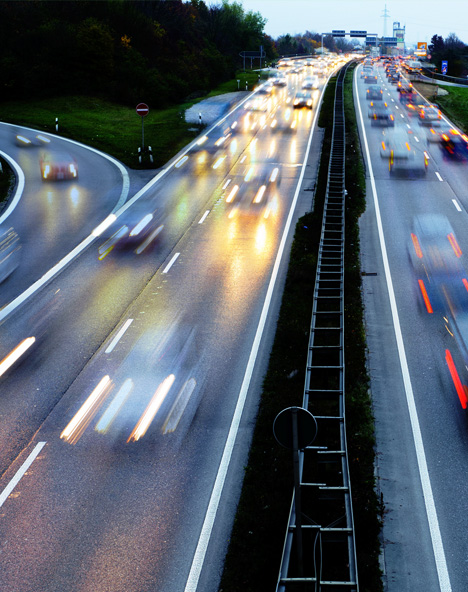
Lukasz says: “an analogy of the need to coordinate is to look at the road system in Europe. I can drive through any country in the EU, and even though the roads are maintained by someone locally, I am able to also use them, which in the end benefits the whole union. And if parts of a road network were to break down, other parts can serve to keep traffic going. This is the way to think of this technology as well.”

Even though this project is focused on the EU, it is important to also have a global view. Lukasz says: “For recommendations we bring forward, may it be standards or other implementations, it’s of course very useful to align with others, given how interconnected we all are. Therefore we are members of relevant global forums to interact with our global colleagues”. Magnus adds on: “This part is essential, so that certain markets don’t need to reinvent the wheel. And there is a lot of ongoing activities in this field currently, with interest from countries like the US, Japan and Malaysia to mention a few.”

An example in the technical space where global corporation has been very successful is in telecoms. The fact that it is possible to bring a mobile phone to any country in the world and make a call home without making any adjustments is quite mind-boggling. Back in the 90’s it was unlikely a European phone would even work at all in the US. Today all of this is taken for granted, but it has been made possible through global standardizations and corporation.

So given the impact joint efforts have had on the mobile industry in the past, what differences in society would we notice here, if this ecosystem of resilient time distribution would become a reality?

Magnus says: “Well the way I see it, as an ordinary citizen you hopefully wouldn’t really notice any difference. It’s not until something actually goes wrong you would notice whether your underlying systems are resilient or not. Therefore I believe part of this initiative is also about education, lifting how complex these systems are and how important it is we work together to secure they are working. This we do through collaboration and it’s why I think the EU plays such an important role here.”

There are numerous examples of cross-border collaborations within the EU that enhance overall resilience. In 2014, when Sweden faced severe forest fires, other EU members assisted with planes, and firefighters came from Poland to help. Similarly, during the summer fires in Greece, Portugal, and Spain in 2024, the EU coordinated first responder assistance from various countries and managed water flows across borders to provide support. Lukasz comments: “The EU has a very strong collaboration between different countries when it comes to resilience against fires, and this is exactly what we want to achieve here, but for time”.

A time distribution ecosystem in place will indeed contribute to a more resilient Europe, and with this project just started, time will tell how it will finally look.

Want to know more about us?

Get started today.

About the Author

Christoffer Ramm

Christoffer is a marketing and sales executive with 15 years of experience in the global telecoms industry. He is responsible for Strategic Product Marketing for Synchronization at Net Insight, driving the marketing strategy for the company’s network-based synchronization solution for critical networks. Christoffer has 11 years of experience from Ericsson with senior roles within product management, marketing and sales in Europe, Latin America and Africa and has previously also served as Head of Marketing at Swedish telecoms scaleup Subtonomy. He has a Master of Science in Electrical Engineering from the Royal Institute of Technology in Stockholm and an MBA from Henley Business School in Copenhagen.